
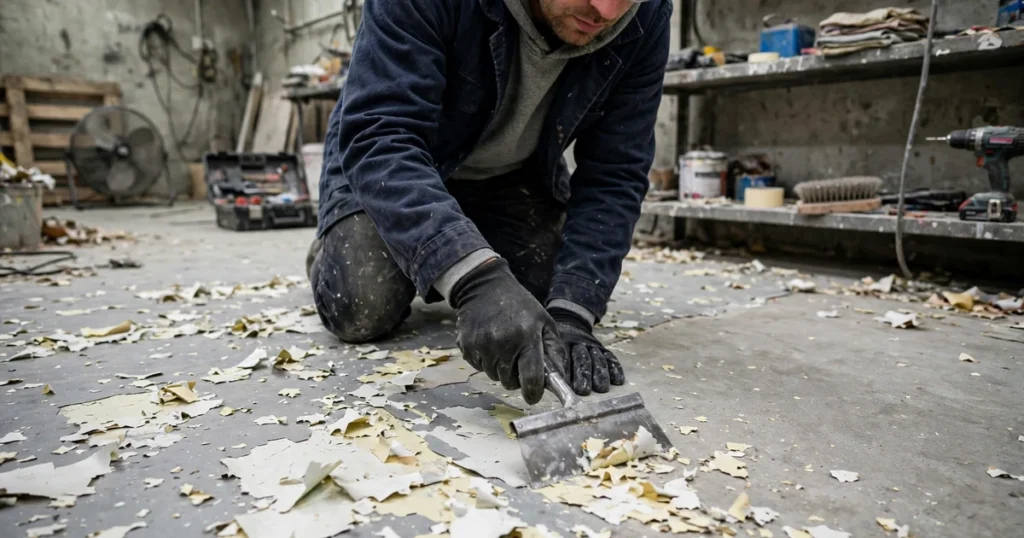
Paint on concrete is stubborn because concrete is porous: the coating sinks into the surface pores and grips hard. The right removal method depends on the paint type, the area size, and how the surface will be used next. Start with the gentlest method that fits the paint, and work up: soap and water for fresh latex, a chemical stripper for cured paint, and grinding or blasting for thick coatings and large areas. This guide covers each method, the safety steps most guides skip, and how to choose.
The short answer: how to remove paint from concrete
Identify the paint first. Latex and acrylic paints are water-based and come off easiest. Oil-based and masonry paints cure harder and need a chemical stripper or mechanical removal. Epoxy floor coatings are the hardest of all and usually need grinding. Test old paint for lead before you sand, grind or pressure wash anything. Then pick the method from the table below, work a test patch, and only then commit to the whole area.
Step 1: identify the paint and test for lead
Rub the paint with a rag dampened with methylated spirit. If paint comes off on the rag, it is water-based latex or acrylic. If the rag stays clean, the paint is oil-based. Epoxy coatings feel thick, glossy and plastic-like, and resist the spirit test entirely. Knowing the type saves wasted effort: soap will never shift cured oil paint, and a light stripper will barely touch epoxy.
Lead is the safety step that matters most. Paint applied before 1978 may contain lead, and in the UK lead paint was common in older properties well into the twentieth century. Buy a lead test kit before any dry sanding, grinding or pressure washing. If the test is positive, do not dry sand or grind: use wet methods or hire a specialist, and keep children and pets away from the work area.
Step 2: choose the method
| Method | Best for | Effort | Downside |
|---|---|---|---|
| Soap and hot water | Fresh latex spills | Low | Useless on cured paint |
| Chemical gel stripper | Cured latex, oil paint, most coatings | Medium | Fumes, dwell time, residue cleanup |
| Pressure washer | Flaking paint outdoors | Medium | Needs 3,000 PSI plus for bonded paint |
| Heat gun | Small areas indoors | High | Slow, burn risk |
| Grinding, diamond cup wheel | Epoxy, thick layers, floors to recoat | High | Dust, changes the surface |
| Soda or sand blasting | Large areas, many layers | Pro job | Cost, mess, surface damage risk |
Method 1: soap, water and scraping
For fresh spills and thin latex paint, start here. Mix warm water with dish soap, pour it over the paint, and let it sit for 10 to 15 minutes. Scrub with a stiff brush, then scrape softened paint with a floor scraper. This costs almost nothing and needs no chemicals, but it only works while the paint is fresh or thin. If scrubbing barely marks the paint, move on rather than wearing yourself out.
Method 2: chemical stripper
A gel stripper is the most reliable choice for most homeowners. Brush on a thick, even coat, about 3 to 6 mm deep, and let it dwell for the time on the label. That is usually 15 to 60 minutes, and longer for bio-based or soy-based products, which work more slowly than old solvent formulas. The paint is ready when it wrinkles, bubbles or feels soft. Scrape off the sludge, scrub the residue out of the surface texture with a stiff brush, and rinse well.
Two warnings matter. First, ventilation: work outdoors or with windows open and a fan running, and wear chemical-resistant gloves, sealed goggles and a respirator. Second, neutralise: solvent-based strippers can keep reacting, so wash the surface with a baking soda solution or the neutraliser the product recommends. If one application leaves paint behind, apply a second coat rather than switching to a harsher method straight away.
Method 3: pressure washing
A pressure washer suits outdoor surfaces: driveways, patios and paths. It works well on flaking paint and thin latex, and it is chemical-free. For bonded paint you need real power: at least 3,000 PSI, and some guides specify 3,000 to 4,000 PSI with a flow of 4 gallons per minute. A household machine at 1,500 to 2,000 PSI will only loosen what is already failing. Hold the nozzle 30 to 45 cm from the surface, use a 15 degree fan tip or a rotating turbo nozzle, and work in sections.
The combination approach is worth knowing: forum reports consistently say stripper followed by pressure washing beats either method alone. Strip first to break the bond, then wash to clear the residue and the pores. This is the best route for a large driveway with old paint.
Method 4: grinding and blasting
When paint will not shift chemically, grinding will. An angle grinder with a diamond cup wheel strips paint and a thin layer of concrete, leaving a clean, roughened surface that is ideal for a new coating. A walk-behind floor grinder covers large floors faster. The cost is dust: concrete dust contains respirable crystalline silica, so use a grinder with a HEPA vacuum attachment, wear a proper respirator, and seal off the area.
Soda blasting, which fires baking soda particles at the surface, is gentler than sandblasting and biodegradable, but both are usually professional jobs. Blasting strips large areas fast, but the wrong pressure can damage the concrete surface permanently. Get quotes if the area is bigger than a single room.
Cleaning up and preparing for what comes next
Whatever method you used, rinse the surface and let it dry fully. Check for paint left in the pores: run a hand over the concrete and look closely in good light. If you plan to repaint or seal, the surface must be clean and dry, and grinding leaves the best profile for a new coating. If you plan to leave the concrete bare, a final wash with a concrete cleaner evens out the appearance. For damaged areas, see our concrete spalling repair guide and concrete crack repair guide before recoating.
| Next step | Surface needed | Notes |
|---|---|---|
| Leave bare | Clean, paint-free | Final wash evens the look |
| Repaint | Clean, dry, roughened | Test for moisture first |
| Seal | Clean, dry, fully stripped | Old paint stops sealer bonding |
| Polish or stain | Ground, even profile | Grinding gives the best base |
Frequently asked questions
Will a pressure washer remove paint from concrete?
It removes flaking and thin latex paint well, and it clears residue after stripping. It struggles with bonded oil paint or epoxy unless the machine delivers at least 3,000 PSI. For stubborn paint, strip first, then wash.
What is the best chemical stripper for concrete?
A gel stripper labelled for masonry or concrete, thick enough to stay put on the surface. Bio-based and soy-based products are safer indoors but need longer dwell times. Follow the label, not a generic time.
Can I remove paint without chemicals?
Yes, for light work: soap and water for fresh latex, a heat gun for small areas, and grinding or blasting for heavy coatings. Cured oil paint and epoxy usually still need a stripper or a grinder.
Is it safe to grind paint off concrete?
Yes, with dust control and a lead test first. Use a HEPA vacuum attachment, wear a respirator rated for silica dust, and never dry grind paint that tested positive for lead.
How do I remove paint from a concrete driveway?
Start with a test patch of gel stripper, scrape, then pressure wash. For a whole driveway, the stripper-plus-wash combination is the most reported successful route. Blasting is the faster professional option for very large areas.
Why does paint keep coming back in the pores?
Because concrete is porous and paint sinks in. Scrub residue out of the texture with a stiff brush after stripping, and rinse well. Grinding is the only method that reliably removes paint from deep in the pores.
Conclusion
Removing paint from concrete is a matching exercise: match the method to the paint, and do the safety steps first. Test for lead, work a test patch, and do not be surprised if the best result comes from combining methods, stripper then wash, or stripper then grind. Take your time with dwell times and cleanup, and the concrete underneath will be ready for whatever comes next, whether that is a new coating, a sealer, or just clean bare concrete.
Sources
- Painting Tips: How to Remove Paint from Concrete, 7 Methods
- Paintfits: How to Remove Paint from Concrete
- Sensible Digs: How to Remove Paint from Concrete, Methods
- ACI Asphalt and Concrete: Can Concrete Grinding Remove Paint?
- Engineer Fix: How to Remove Old Paint from Concrete
About the author
Kaleemullah Formulas use standard geometry and published bag yields; sources are linked in each article.