
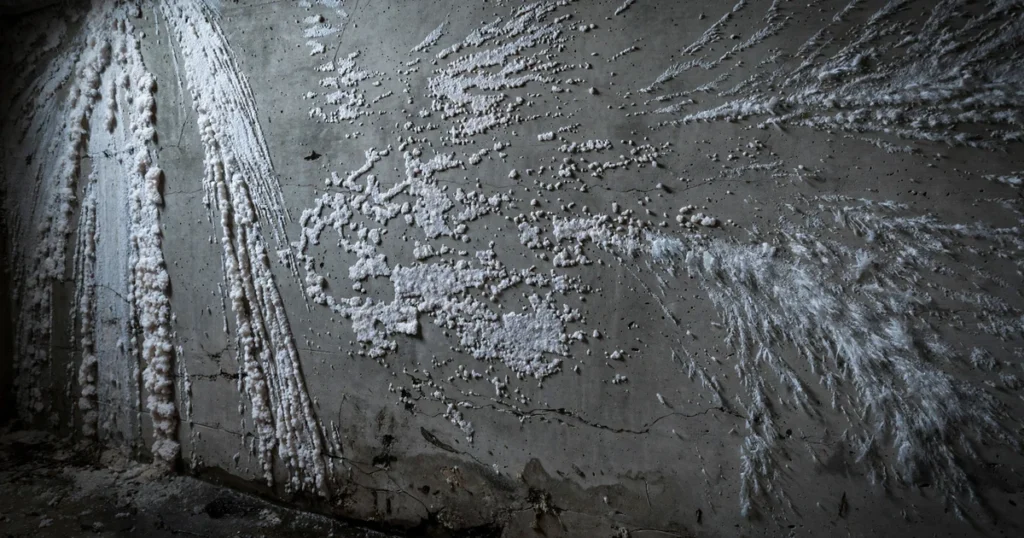
Efflorescence is the white powdery deposit that appears on concrete, and it keeps coming back because cleaning only removes the symptom. Soluble salts inside the concrete are carried to the surface by water, and when the water evaporates it leaves the salts behind as white crystals. You can brush, wash or acid-treat the stains away, but they will return until you find where the water is coming from and stop it. Then a penetrating sealer blocks the moisture path for good. This guide compares removal methods, walks through the root-cause diagnosis most guides skip, and shows how to seal afterwards so the problem ends.
The short answer
Remove efflorescence by dry brushing first, then scrubbing with water and a stiff brush. For stubborn stains, use white vinegar or a dilute acid solution, then rinse thoroughly. Wear gloves and eye protection with any acid, ventilate the area and test a small patch first. Then track down the moisture source, such as poor drainage or a leaking downpipe, and fix it. Once the concrete is fully dry, apply a penetrating sealer. Skip the diagnosis and sealing steps and the white powder will be back within months.
What efflorescence actually is
Concrete contains soluble salts, mainly calcium compounds from the cement itself. These salts are harmless and present in every mix. When water moves through the concrete, from rain, groundwater, leaks or condensation, it dissolves a small amount of those salts and carries them along. When the water reaches the surface and evaporates, the salts are left behind as a white crystalline deposit. That is efflorescence. In most cases it is purely cosmetic. It does not mean your concrete is weak or badly mixed. New concrete is especially prone because it still holds construction moisture, and the bloom often fades over the first year as it dries out.
Efflorescence is not mould, mildew or lichen. Mould is organic and usually dark or green, and it grows on the surface. Efflorescence is mineral, white or pale grey, and it comes from inside the concrete. If the deposit wipes off as a dry powder, it is almost certainly efflorescence. There is also a rarer cousin called cryptoflorescence, where salts crystallise just beneath the surface and flake it off. Unlike ordinary efflorescence, that can cause real damage, and the warning signs are covered below.
Removal methods compared
Start with the gentlest method that works and only move up if you need to. Aggressive treatment on a light deposit risks etching the concrete for no benefit.
| Method | Best for | Cautions |
|---|---|---|
| Dry brushing | Light, powdery deposits | Do not wet a light bloom first, water can drive salts back in |
| Water wash and scrub | Moderate deposits | Use sparingly, you are adding the very water that causes the problem |
| White vinegar | Stubborn surface stains | Mild acid, still rinse fully so no residue remains |
| Dilute muriatic acid | Heavy, long-standing deposits | Gloves and eye protection essential, ventilate, test a hidden patch, rinse immediately and thoroughly |
With muriatic acid, also sold as hydrochloric acid, always add acid to water rather than water to acid, and follow the dilution on the product label instead of improvising. Rinsing matters as much as the cleaning. Acid left on the surface keeps reacting and can etch the concrete, so flood the area with clean water when done. Pressure washing alone is a poor choice. It blasts the deposit off but drives water deep into the concrete, which is exactly the mechanism that creates efflorescence. Every method above removes the deposit you can see. None removes the salts still inside, and none stops water moving through. That is why the next section matters more than this one.
Why it returns: diagnose the moisture source first
This is the step almost every guide skips. Efflorescence is a moisture problem wearing a salt costume. Work through the table before treating anything.
| Moisture source | Telltale signs | The fix |
|---|---|---|
| Leaking gutters or downpipes | Bloom in streaks below the leak line | Repair the gutter, redirect the downpipe |
| Soil piled against the wall | Bloom low on the wall, damp-proof course buried | Lower the soil level, expose the damp-proof course |
| Poor drainage, pooling water | Bloom near slab edges after rain | Regrade falls, clear blocked drains |
| Sprinklers or hoses | Bloom where spray hits daily | Redirect the spray away from concrete |
| Retaining wall, no back drainage | Bloom across the whole visible face | Drainage stone and weep holes behind the wall |
| New concrete drying out | Bloom in the first year, no leak evident | Patience, keep clean, seal once fully dry |
The classic DIY mistake is treating the symptom on repeat: acid wash in spring, white bloom again by autumn. Each cycle costs time and slowly etches the surface. It sits high on our list of common DIY concrete mistakes. One professional trick is worth knowing. Tape a square of clear plastic to the concrete for a day or two. Moisture under the plastic means water is still moving through from behind. A dry sheet with bloom after rain points to water hitting the face itself, such as sprinklers.
Sealing afterwards
Once the deposit is removed, the moisture source is fixed and the concrete is fully dry, sealing is what keeps efflorescence away. A penetrating sealer soaks into the pores and lines them with a water-repellent barrier, so water can no longer ferry salts to the surface. Never seal damp concrete. Sealing over trapped moisture locks the water in, and the bloom forms underneath the sealer. Wait for several dry days, and on new concrete wait until it has cured, typically around 28 days. Our guide on how to cure concrete explains the drying timeline.
| Sealer type | How it works | Suitability for efflorescence |
|---|---|---|
| Penetrating silane or siloxane | Soaks in, lines pores, surface looks unchanged | Best choice, blocks the moisture path while letting vapour out |
| Film-forming acrylic | Sits on the surface as a coating | Risky, can trap moisture and lift in white patches |
The concrete sealer types are compared in detail in our dedicated guide. Apply at the manufacturer’s coverage rate, keep the concrete dry for the stated curing period, and expect to reapply every few years on exposed surfaces.
When it signals a structural problem
Ordinary efflorescence is cosmetic, but a few patterns deserve a professional look. If the surface is flaking off where the bloom appears, salts may be crystallising beneath the surface. That is cryptoflorescence and it destroys concrete from the inside. Brown or orange streaks mixed with the white deposit can mean water is reaching the steel reinforcement and corroding it, which cracks concrete from within as the rust expands. On below-ground walls, efflorescence with a musty smell or damp patches suggests ongoing water ingress that needs waterproofing advice, not just cleaning. The rule of thumb is simple. Powder on a dry, sound surface is cosmetic and you can handle it. Powder plus damage, damp or rust is a symptom of something bigger.
FAQs
Is efflorescence harmful to concrete?
In the vast majority of cases, no. Surface efflorescence is a cosmetic mineral deposit and does not weaken the concrete. The exceptions are cryptoflorescence, where sub-surface crystallisation flakes the concrete off, and any bloom appearing with spalling, rust staining or persistent damp.
Will efflorescence go away on its own?
Often, especially on new concrete, where the first-year bloom is construction moisture working its way out. But if the moisture source is ongoing, such as a leak or bad drainage, it will not fade until the water is stopped.
Can I just paint over efflorescence?
No. Salts crystallise under the paint and lift it within months. Remove the deposit, fix the moisture, seal, and only then consider paint.
Does efflorescence mean my concrete is poor quality?
No. Every mix contains soluble salts, and even good concrete blooms if water moves through it. Efflorescence tells you about moisture, not mix quality.
How long should I wait before sealing after cleaning?
Wait until the concrete is fully dry, meaning several consecutive dry days at minimum, longer after heavy rain or on new concrete. The plastic sheet test described above is a practical check. Sealing damp concrete traps moisture and the bloom forms beneath the sealer.
Can efflorescence happen indoors?
Yes, on basement walls and garage floors where groundwater or plumbing leaks push moisture through. Indoor cases always point to an active water source, so diagnosis matters even more. Fix the ingress first, then clean and seal.
Conclusion
Efflorescence keeps coming back for one reason: the water keeps coming back. The white powder is the visible half of a moisture problem. Remove it with brushing, water, vinegar or dilute acid, using gloves and eye protection. Then do the part most guides skip. Find the leak, the bad drainage or the ground contact feeding the moisture, fix it, let the concrete dry, and finish with a penetrating sealer. Do it in that order and the problem ends.
Last verified: October 2026.
About the author
Kaleemullah Formulas use standard geometry and published bag yields; sources are linked in each article.