
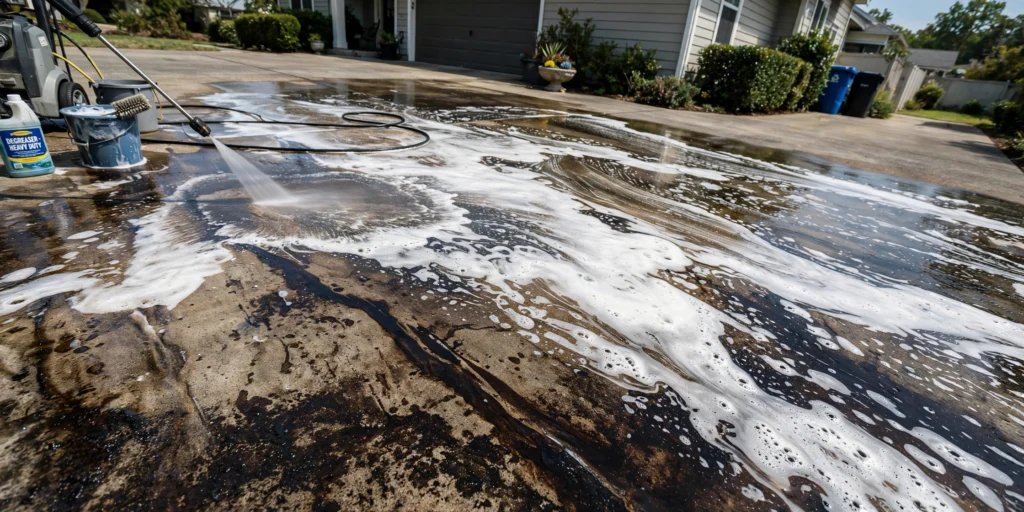
The best way to remove an oil stain from a concrete driveway depends on its age. For a fresh spill, cover it with cat litter or sawdust immediately to absorb the surface oil, then scrub with washing-up liquid and hot water. For a stain that has been there for weeks or months, you need a degreaser or a poultice that draws the oil out of the concrete’s pores. This guide covers each method step by step, compares the commercial removers worth buying, and flags the popular advice you should ignore.
Match the Method to the Stain’s Age
Concrete is porous, so oil sinks deeper the longer it sits. Pick your method from this table before you start.
| Stain age | What works | What to expect |
|---|---|---|
| Fresh (under 24 hours) | Cat litter or sawdust, then washing-up liquid scrub | Often removes it completely |
| Recent (days to weeks) | Commercial degreaser, scrubbed and rinsed | Fades the stain significantly; may need two rounds |
| Old (months or years) | Poultice method or strong solvent degreaser | Improves it a lot; a faint shadow may remain |
Step 1: Absorb Fresh Spills Immediately
If the spill just happened, speed matters more than technique. Pour cat litter, sawdust, or even dry cement generously over the whole spill, grind it in lightly with your shoe, and leave it for several hours or overnight. The absorbent draws the surface oil out before it migrates deeper. Sweep it up and dispose of it with household waste, not down a drain.
Do not reach for the hose yet. Water on a fresh oil spill just spreads it across a wider area of concrete.
Step 2: Scrub With Washing-Up Liquid
Once the absorbent is swept up, squirt washing-up liquid directly onto the stain and scrub hard with a stiff yard brush. Add a kettle of hot (not boiling) water and keep scrubbing for several minutes, then rinse. For light, recent stains this is often enough. Repeat once if a shadow remains.
Step 3: Use a Degreaser for Set-In Stains
When scrubbing alone will not shift it, a commercial degreaser is the next step. Apply it to the dry stain, leave it for the time on the label (usually 5 to 15 minutes), scrub with a stiff brush, and rinse thoroughly. Do not let the degreaser dry on the surface. For stubborn stains, a second application works better than one long soak.
Which degreaser to buy: a comparison
| Product | Type | Dilution | Best for |
|---|---|---|---|
| Zep Citrus Degreaser | Citrus solvent | 6 oz per gallon of water for light stains; 12 oz per gallon for heavy | General driveway stains |
| Oil Eater Original | Water-based alkaline | Use neat or diluted per label | Workshops and garages |
| Simple Green Concrete Cleaner | Water-based | Use neat for stains | Lighter stains, regular cleaning |
Zep’s dilution guidance comes from the product label: 6 ounces per gallon of water handles light oil film, while 12 ounces per gallon tackles heavy deposits. Buy the concentrate rather than the ready-to-use spray for a driveway-sized job; it works out far cheaper per square metre.
Step 4: The Poultice Method for Deep, Old Stains
A poultice draws oil up out of the concrete over 24 hours. It is the method the US General Services Administration recommends for historic masonry, and it works on driveways too.
- Mix the poultice. Combine an absorbent powder (diatomaceous earth, talcum powder, or powdered clay cat litter) with a solvent such as acetone or mineral spirits until you have a thick paste, roughly the consistency of peanut butter.
- Apply it thick. Trowel the paste over the stain about 6 to 12 mm thick, extending beyond the stain’s edges.
- Cover and wait. Lay plastic sheeting over the poultice and tape the edges down. Leave it for 24 hours. As the solvent evaporates, it pulls the oil up into the powder.
- Remove and rinse. Scrape off the dried poultice, dispose of it safely, and rinse the area. Repeat for very old stains.
Work in a ventilated area, wear gloves, and keep solvents away from drains and planting beds.
What NOT to Do
Two pieces of popular advice will make things worse:
- Do not pour boiling water on the stain. Several ranking guides recommend flushing with boiling water, but the thermal shock can craze or spall the concrete surface, and the water spreads the oil wider before it can be absorbed.
- Do not attack it with a wire brush first. Aggressive wire brushing on a stain you have not treated just roughens the surface and drives oil deeper into the scratches. Use a stiff nylon or bassine brush instead.
Preventing the Next Stain
Once the driveway is clean, a penetrating concrete sealer makes the next spill far easier to deal with because oil sits on the surface instead of soaking in. Fix vehicle leaks promptly, keep a bag of cat litter in the garage for drips, and park leaky cars on a drip tray. For more on protecting outdoor concrete, see our DIY concrete mistakes guide, and if you are curing new concrete nearby, follow proper curing practice so the surface is at full strength before it takes traffic. To work out how much concrete a new drive needs, use our concrete calculator.
Frequently Asked Questions
Will bleach remove oil stains from concrete?
Bleach lightens the appearance slightly but does not dissolve oil, so the stain comes back as the surface dries. Use a degreaser or poultice instead.
Can I use a pressure washer on an oil stain?
A pressure washer helps rinse after treatment but rarely removes a set-in stain on its own. Worse, it can drive surface oil deeper into the concrete. Always degrease or poultice first, then rinse.
How long does the poultice method take?
About 24 hours per application. Very old or deep stains may need two or three rounds.
Will the stain come out completely?
Fresh stains often disappear entirely. Old stains usually fade to a faint shadow even after repeated treatment. If the shadow bothers you, a tinted concrete sealer can even out the appearance.
Is it safe to use solvents on my driveway?
Yes with precautions: ventilate the area, wear gloves and eye protection, keep solvents away from drains, lawns and planting beds, and dispose of used poultice material responsibly.
Conclusion
Fresh oil comes up with cat litter and washing-up liquid; older stains need a degreaser; deep, stubborn marks need a poultice. Match the method to the stain’s age, skip the boiling water, and seal the concrete afterwards to make the next spill a five-minute job.
Last verified: October 2026.
About the author
Kaleemullah Formulas use standard geometry and published bag yields; sources are linked in each article.