
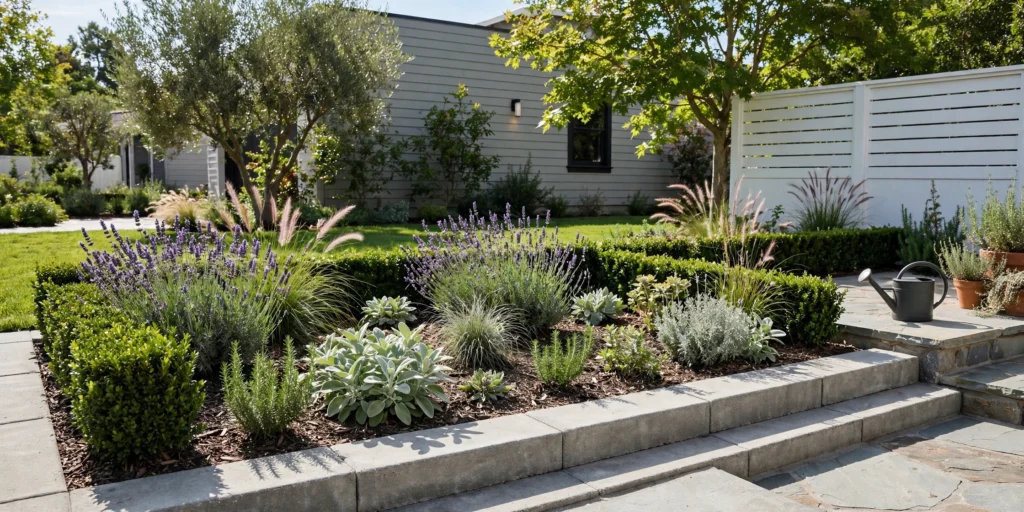
If you are choosing between concrete edging and plastic edging, here is the honest answer: concrete wins on lifespan, looks and maintenance, while plastic wins on upfront price and DIY ease. Properly installed concrete edging lasts for decades; plastic edging usually needs replacing every 3 to 5 years. This guide compares the two on cost per year, installation and which suits your garden.
The short answer: which edging wins?
For most homeowners who plan to stay put, concrete edging is the better long-term investment. It sits permanently, mower wheels run right along its flat top, and you never dig it up again. Plastic edging makes sense when your budget is tight, your beds change shape often, or you want a cheap weekend project. Compare cost per year, not just the price tag: the cheapest option is often the most expensive one over time.
Concrete edging: pros and cons
Concrete edging is a continuous poured strip of concrete along the border between lawn and beds. Contractors usually install it with a curb machine, or it can be hand-formed in wooden forms for short runs.
Pros of concrete edging:
- Lasts for decades with proper installation, far outliving plastic or metal edging.
- Very low maintenance once cured: no repositioning or replacing worn sections.
- Can be coloured and stamped to match your paving or house, giving a professional finish.
- Mower wheels run on the flat top, so you skip string trimming along the edges.
- Holds mulch and soil in place in heavy rain and blocks aggressive grasses from invading beds.
Cons of concrete edging:
- High upfront cost. One US contractor source puts it from about $4 per linear foot installed, roughly 25% more overall than steel edging.
- Professional installation is usually recommended, which adds to the bill.
- Rigid and permanent: reshaping beds later means cutting or removing the concrete.
- Can settle or crack over time, especially on poorly prepared ground, needing patch or repair.
- Needs curing time: keep heavy pressure off fresh edges for the first few weeks.
Plastic edging: pros and cons
Plastic edging comes in rolls or strips, usually black or green. You set it into a shallow trench and pin it down with stakes. It is the default at most garden centres because it is cheap and anyone can install it.
Pros of plastic edging:
- Cheapest option by far, a fraction of the cost of concrete per foot.
- Flexible, so it handles curves and irregular bed shapes with ease.
- Lightweight and DIY friendly. A spade, a trench and the supplied stakes are all you need.
- Easy to pull up and reposition when you redesign your beds.
Cons of plastic edging:
- Typically needs replacement every 3 to 5 years as sunlight makes it brittle.
- Can heave out of the ground in freeze-thaw cycles, leaving gaps along the bed edge.
- Can lift, letting grass grow under or through it into your beds.
- Cheap grades can look thin and flimsy, dragging down the look of the bed.
- Least popular with some landscapers for premium jobs.
Concrete edging vs plastic edging: head to head
Here is the comparison condensed into one table.
| Feature | Concrete edging | Plastic edging |
|---|---|---|
| Lifespan | Decades with proper installation | 3 to 5 years typically |
| Upfront cost | High (from about $4 per foot installed) | Low (cheapest option) |
| Maintenance | Very low once cured | Repositioning, then replacement |
| Installation | Base prep; professional recommended (hand forms or curb machine) | Trench and stakes; easy DIY |
| Appearance | Coloured and stamped; professional finish | Functional; less premium look |
| Flexibility | Rigid; hard to reshape later | Flexible; easy curves |
| Mower friendly | Yes, wheels run right on it | Low profile; can catch blades if heaved |
| Main weakness | Can settle or crack; needs repair | Goes brittle in sun; heaves in freeze-thaw |
Cost per year: the worked example competitors skip
Most articles skip this comparison, and it flips the story. Take a 50-foot garden border over 25 years.
Concrete edging at $4 per foot installed costs $200 upfront. Spread over 25 years of service, that works out to just $8 per year.
Plastic edging at roughly $1 per foot costs $50 upfront. But replacing it every 4 to 5 years means buying it 5 or 6 times over 25 years: about $250 to $300 in materials, or $10 to $12 per year, plus your time reinstalling it each round.
| Edging | Upfront cost (50 ft) | Replacements in 25 years | Total material cost | Cost per year |
|---|---|---|---|---|
| Concrete | $200 ($4/ft) | 0 | $200 | $8 |
| Plastic | $50 (~$1/ft) | About 5 (every 4-5 years) | $250-$300 | $10-$12 |
So the material that looks expensive is usually cheaper over the life of the garden, especially if you pay someone to reinstall the plastic each time. Plastic still wins in one scenario: if you might move or redesign within a few years, you will never hold the concrete long enough to recover its upfront cost.
Which should you choose? Match it to your garden
Choose concrete edging if:
- Your garden layout is settled and you are staying put for 5 years or more.
- You want a tidy edge the mower can ride on, with no more string trimming.
- You are fighting aggressive grass or mulch washout.
- Kerb appeal matters, for example if you plan to sell the house.
Choose plastic edging if:
- You are on a tight budget and need the beds defined this weekend.
- You like to redesign your beds every couple of years and want flexibility.
- You rent, so a permanent installation makes no sense.
- You want a quick, cheap fix while planning a bigger project.
Steel edging is a middle ground: more durable than plastic and cheaper than concrete, but steel can rust (especially with irrigation) and aluminium dents from mower strikes.
If your edging project is part of a bigger makeover, you may be pouring a patio at the same time. Run the numbers with our slab concrete calculator so you order the right amount, and check the concrete slab thickness guide to get the depth right next to your new edging.
Installation notes: what each type actually involves
Plastic edging: dig a narrow trench along your bed line, lay the strip in (unroll it in the sun first so it lies flat), overlap joints, drive in stakes every few feet, then backfill and tamp firmly. Straight lines take patience because the material wants to curl. The most common DIY mistake is a shallow trench with too few stakes, which is why edging lifts and lets grass underneath.
Concrete edging: compact a gravel base along the bed line, set wooden forms or hire a contractor with a curb machine, then pour, shape and finish. Keep traffic off the fresh edge while it cures. DIY attempts fail most often here: poor base preparation is the main reason concrete edging settles and cracks. Read our guide to common DIY concrete mistakes before you pour, because the errors that ruin a slab will ruin edging too.
Frequently asked questions
Which lasts longer, concrete or plastic edging?
Concrete, by a wide margin. Properly installed concrete edging lasts for decades; plastic edging typically needs replacing every 3 to 5 years as sunlight makes it brittle.
Is concrete edging worth the extra cost?
Over a long stay, usually yes. On a 50-foot border over 25 years, concrete works out at about $8 per year versus $10 to $12 for plastic, with no reinstalling. If you might move or redesign soon, plastic is the smarter buy.
Can I install concrete edging myself?
You can hand-form short runs in wooden forms, but the finish rarely matches a contractor with a curb machine. Most professionals recommend pro installation. If you go DIY, base preparation matters more than anything else.
Does plastic edging stop grass from spreading?
It helps while it sits properly. Once it lifts or heaves, grass creeps under or through the gaps into your beds. A continuous concrete curb blocks it far more reliably because there are no joints to exploit.
How do I keep plastic edging from popping out of the ground?
Dig the trench deep, use more stakes than the pack suggests, and backfill and tamp firmly. Even so, in freeze-thaw climates expect it to lift eventually; that is the material, not your installation.
Can concrete edging crack?
Yes, especially with poor base preparation or ground movement. Patch or replace the damaged section rather than redoing the whole run. Proper base prep and professional installation keep the risk low.
Conclusion
Concrete edging is the fit-and-forget choice: higher upfront cost, decades of tidy edges and lower cost per year for anyone staying put. Plastic is the flexible, budget-friendly choice: cheap and easy now, but expect to replace it every few years. Run the 25-year maths before you decide, because the sticker price tells only half the story.
Last verified: October 2026.
About the author
Kaleemullah Formulas use standard geometry and published bag yields; sources are linked in each article.